
Month-end close, reconciliation and MIS for CA firms
Practical guides for chartered accountants in India: closing clients’ books faster, reconciling bank to Tally, producing MIS clients trust, and keeping GST on schedule.
Nearly 70% of Indian businesses struggle with manual invoice processing
Most Indian firms still handle invoices by hand, adding cost, rework and compliance risk to everyday finance work. What a new study found, what it does not say, and what CA firms can do about it at month-end.
Read article →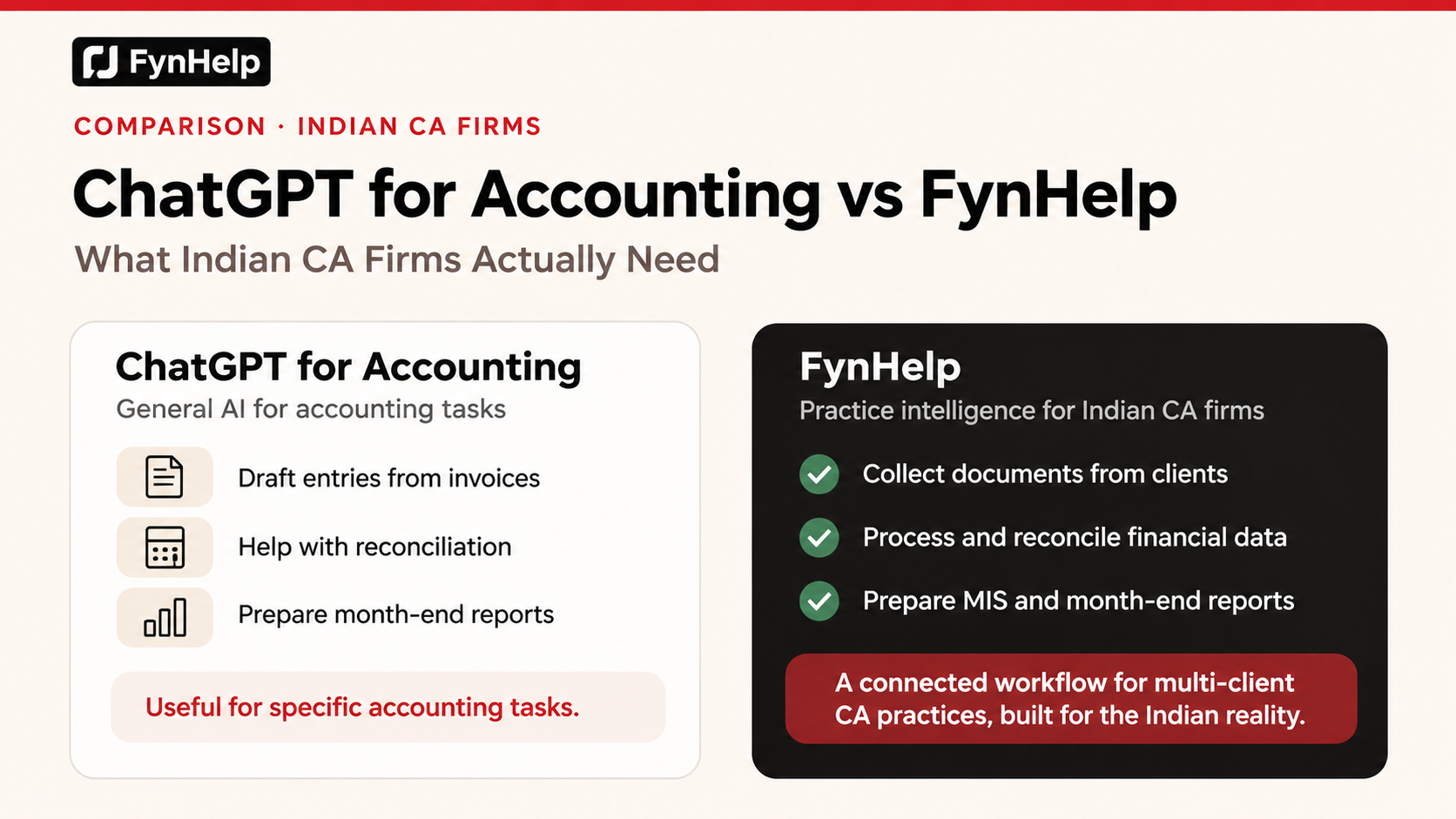
ChatGPT for Accounting vs FynHelp: What Indian CA Firms Actually Need
OpenAI's ChatGPT for Accounting brings AI into invoice processing, reconciliation and reporting. But Indian CA firms face a wider operational challenge involving Tally, GST workflows, 26AS/AIS, client documents and multi-client coordination. Discover how general-purpose accounting AI differs from FynHelp's practice intelligence and month-end close workflows.
Read article →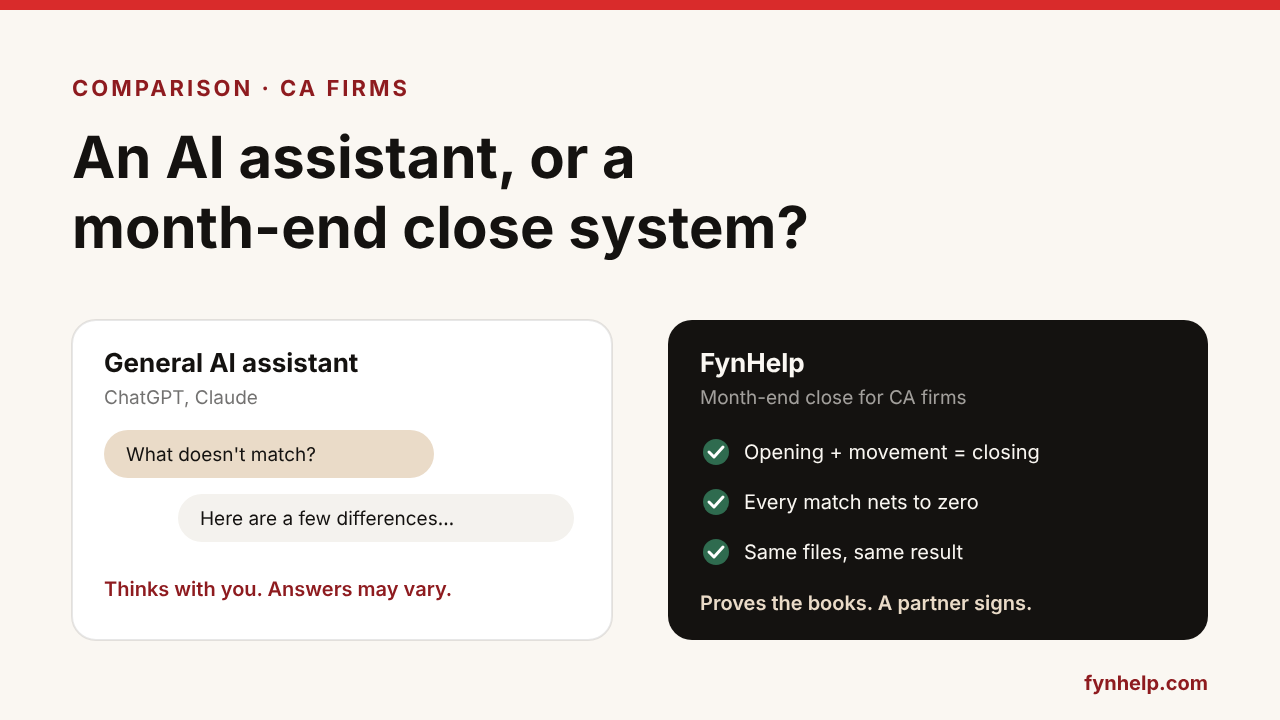
ChatGPT for Accounting vs FynHelp: an AI assistant or a month-end close system?
A general AI assistant in your team's hands is better than a secret free tool. But a month-end close needs proof, not just answers. Where each fits in an Indian CA firm, and how to use both safely.
Read article →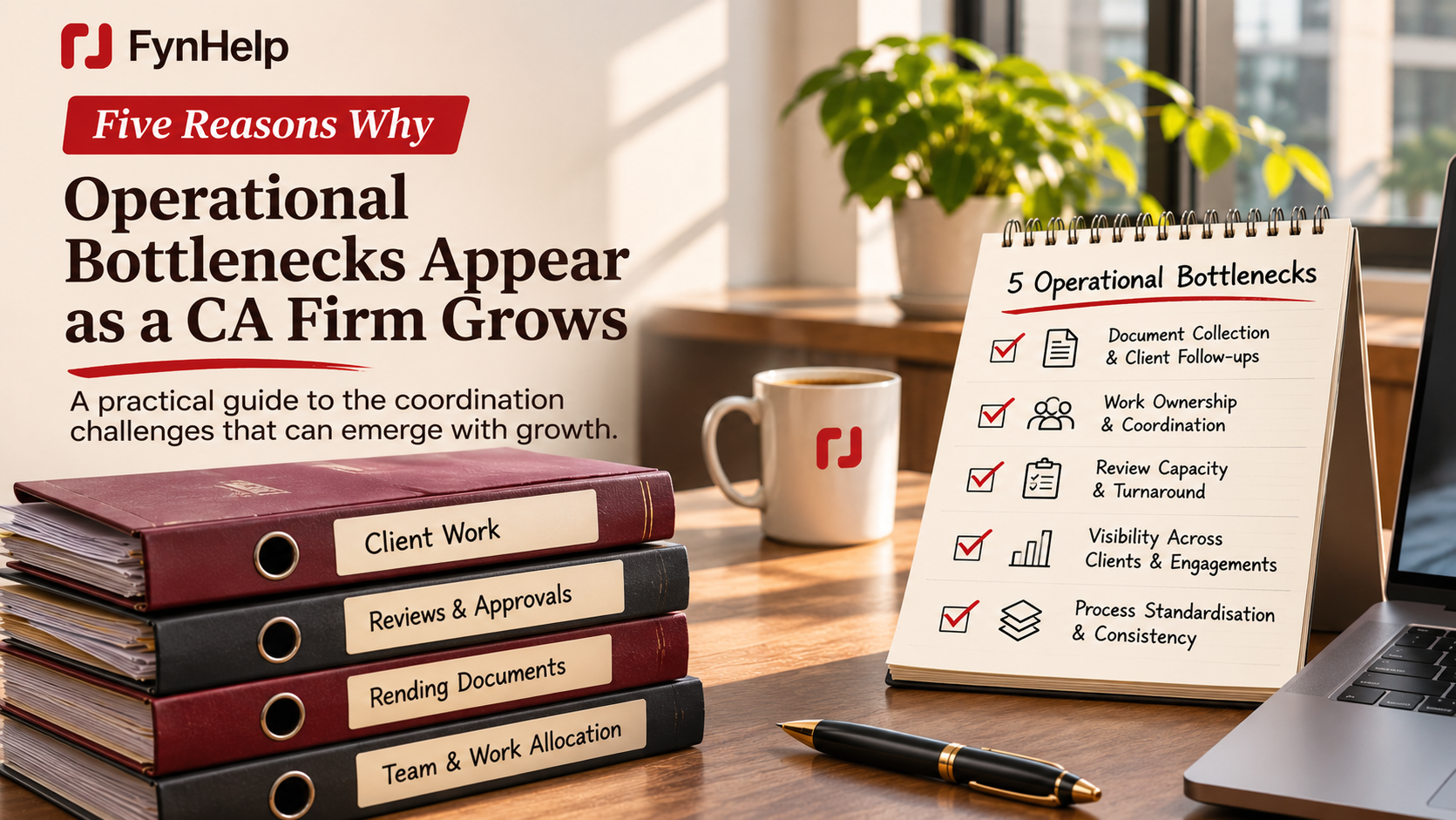
5 Operational Bottlenecks That Appear as a CA Firm Grows
As a CA firm grows, managing client work can become increasingly complex. Document collection, task ownership, review capacity and visibility across clients can create operational bottlenecks. Discover five areas to examine and how a structured workflow can help your practice manage growth more effectively.
Read article →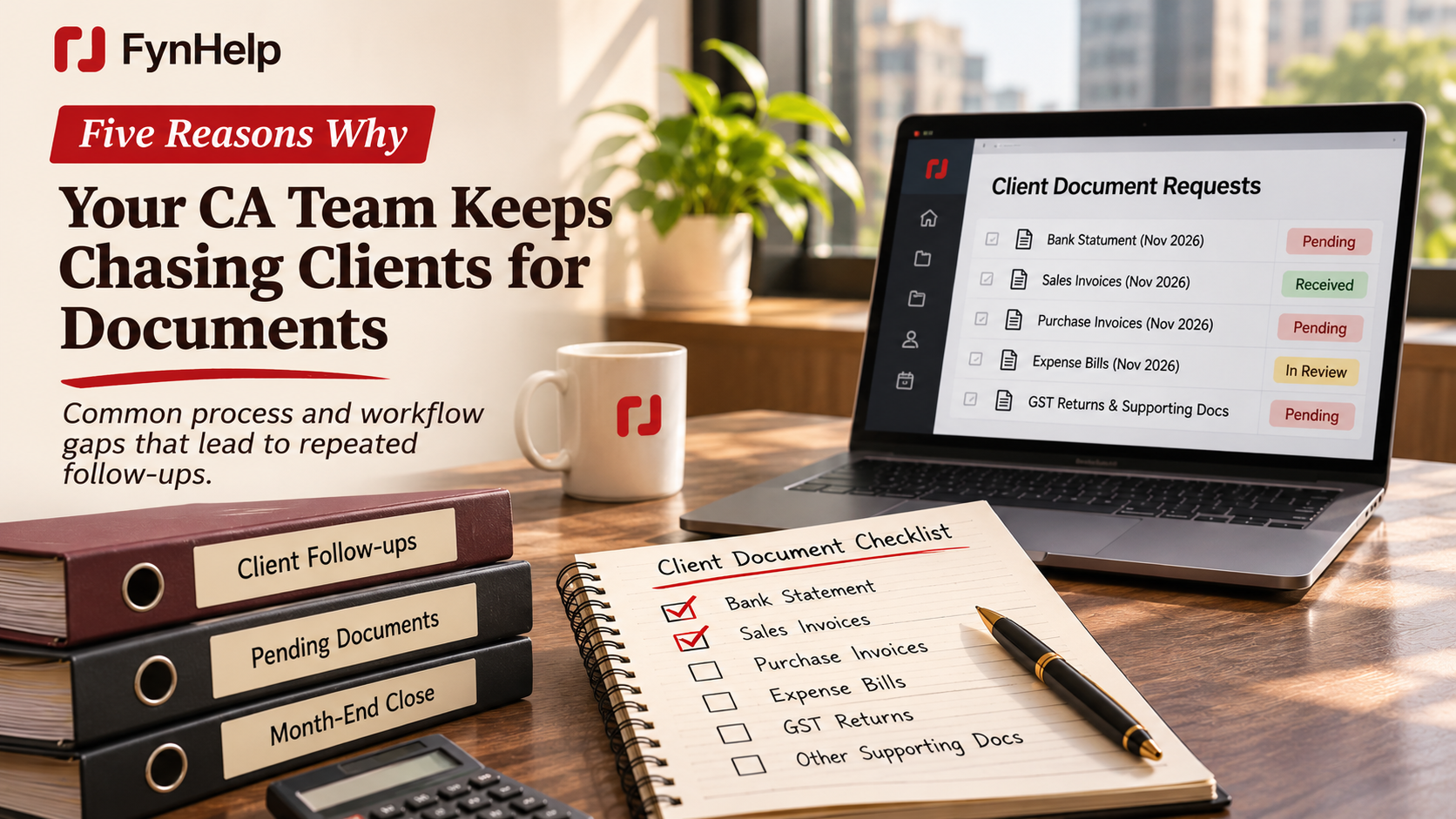
5 Reasons Your CA Team Keeps Chasing Clients for Documents
Repeatedly following up with clients for bank statements, invoices and supporting documents can consume valuable time in a CA firm. Discover five possible reasons document collection becomes difficult and how structured requests, clear ownership and better tracking can improve the process.
Read article →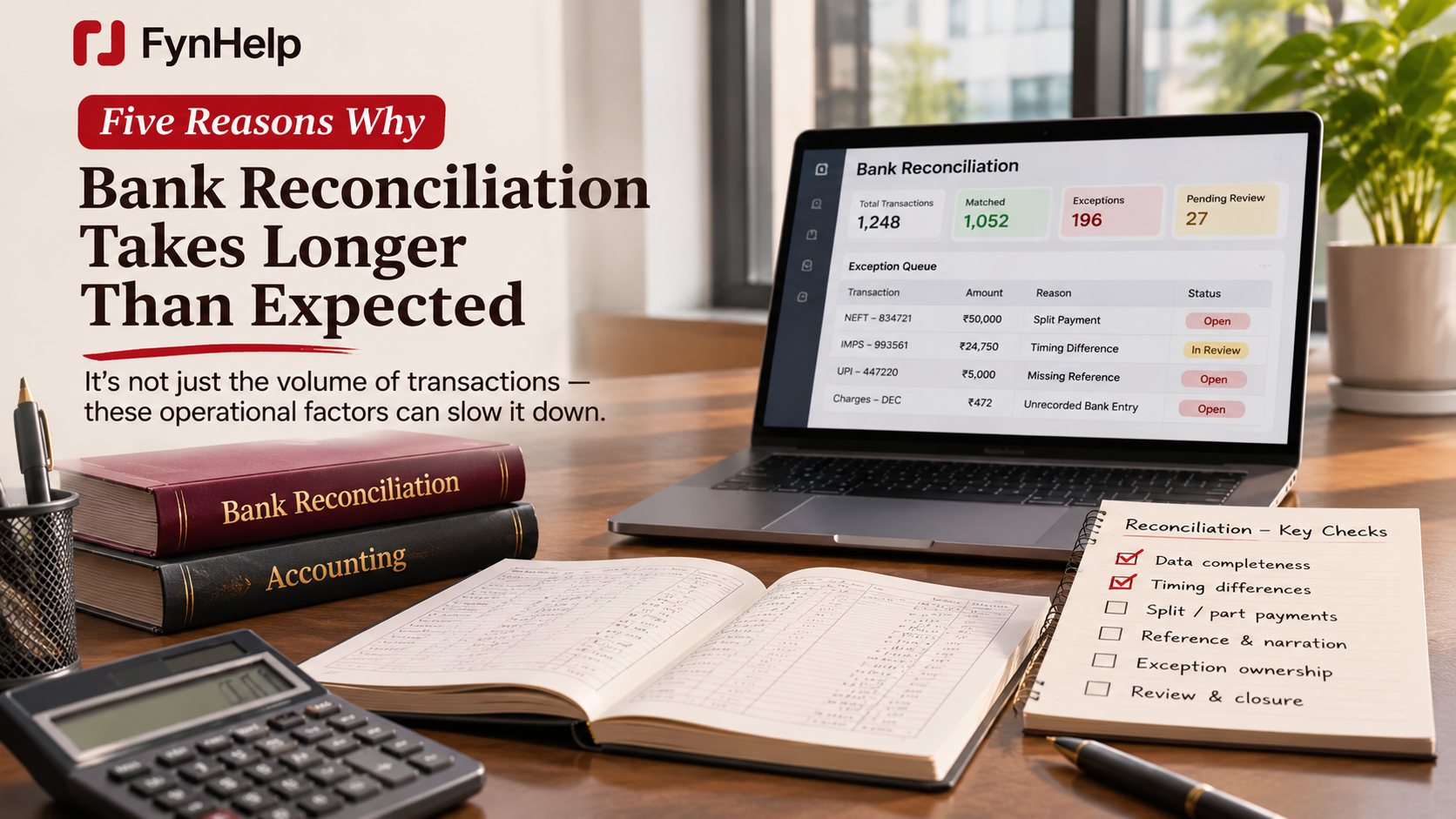
5 Reasons Bank Reconciliation Takes Longer Than Expected
Bank reconciliation can take longer than expected even when transaction volumes are manageable. Incomplete data, timing differences, split payments, unclear references and unresolved exceptions can slow down the process. Discover five operational reasons behind reconciliation delays and how CA firms can improve visibility and control.
Read article →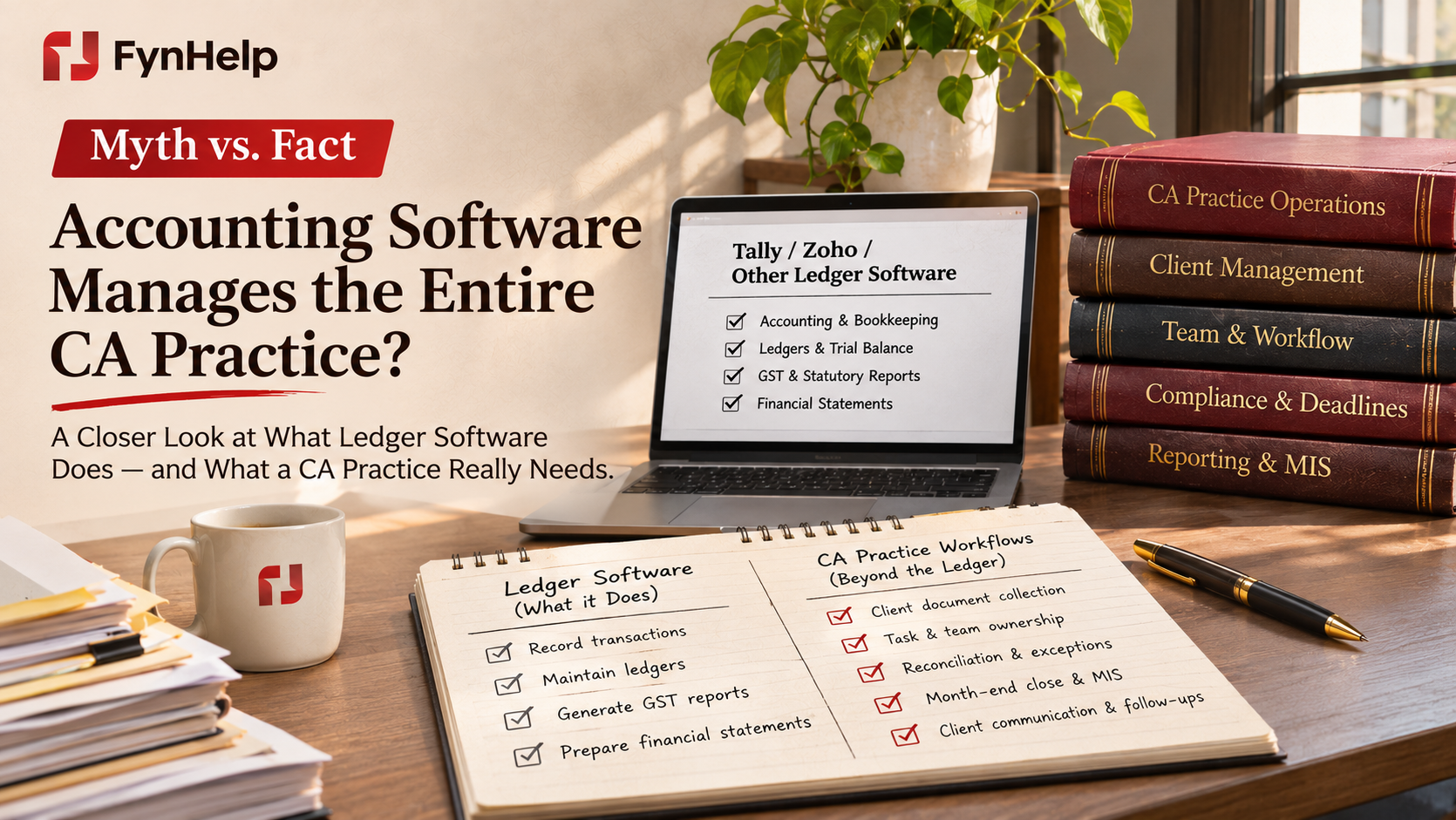
Myth vs. Fact: Accounting Software Does Not Manage Your Entire CA Practice
Accounting software is essential to a CA firm's work, but managing a practice involves much more than maintaining ledgers. Client document collection, task ownership, follow-ups, reconciliation exceptions and review workflows require operational coordination beyond the accounting system. Understand the difference and how connected practice workflows complement your existing tools.
Read article →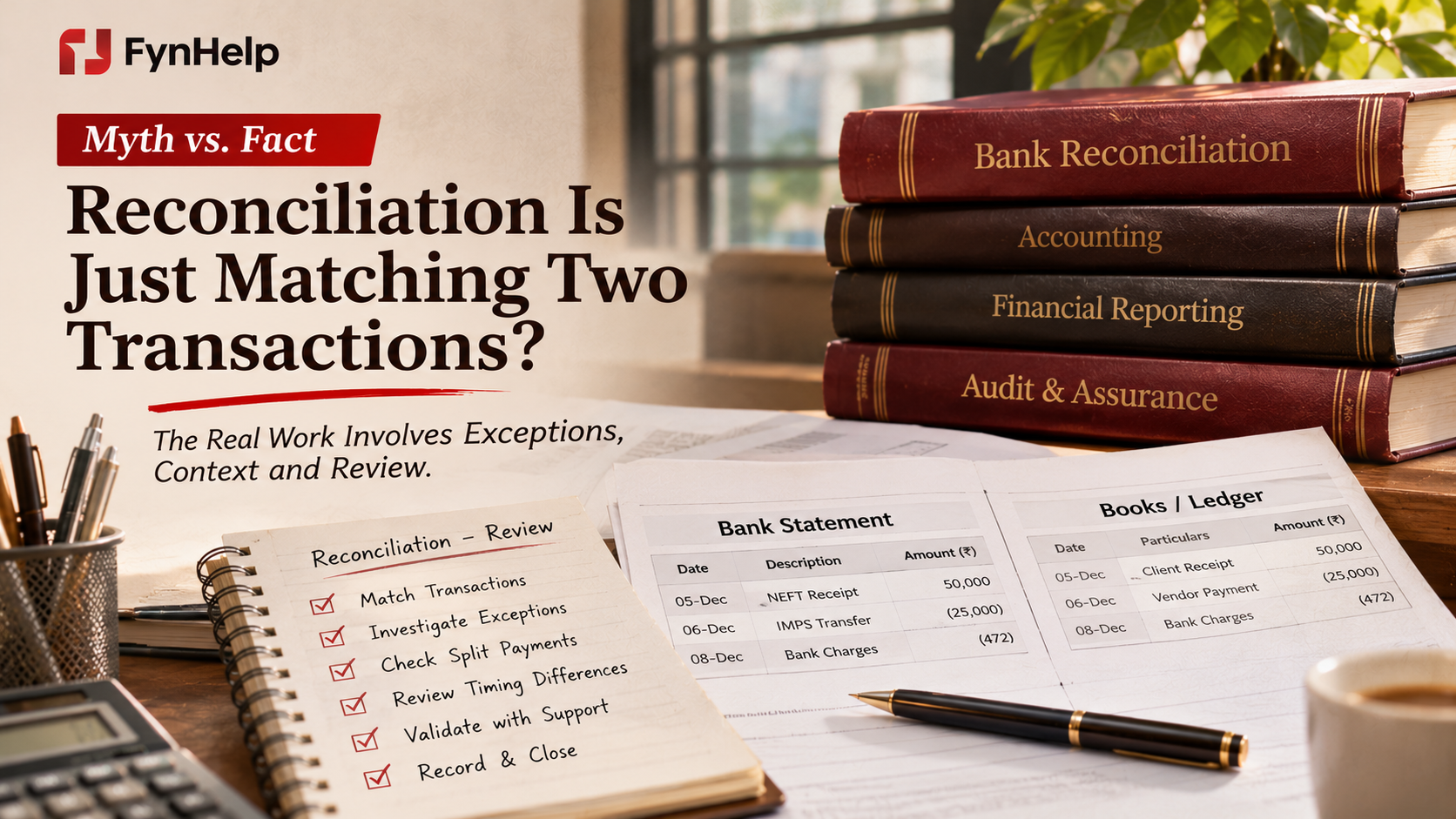
Myth vs. Fact: Bank Reconciliation Is More Than Matching Two Transactions
Bank reconciliation is often treated as a simple exercise of matching transactions between bank statements and accounting books. In practice, accountants must also investigate split payments, timing differences, unmatched entries, duplicate transactions and missing references. Understand what effective reconciliation really involves.
Read article →
Myth vs. Fact: Hiring More Juniors Is the Only Way to Handle More Clients in a CA Firm
As a CA firm takes on more clients, hiring additional juniors may seem like the obvious solution. But increased headcount does not automatically solve workflow bottlenecks. Discover how process design, task ownership and workflow visibility influence a firm's ability to scale.
Read article →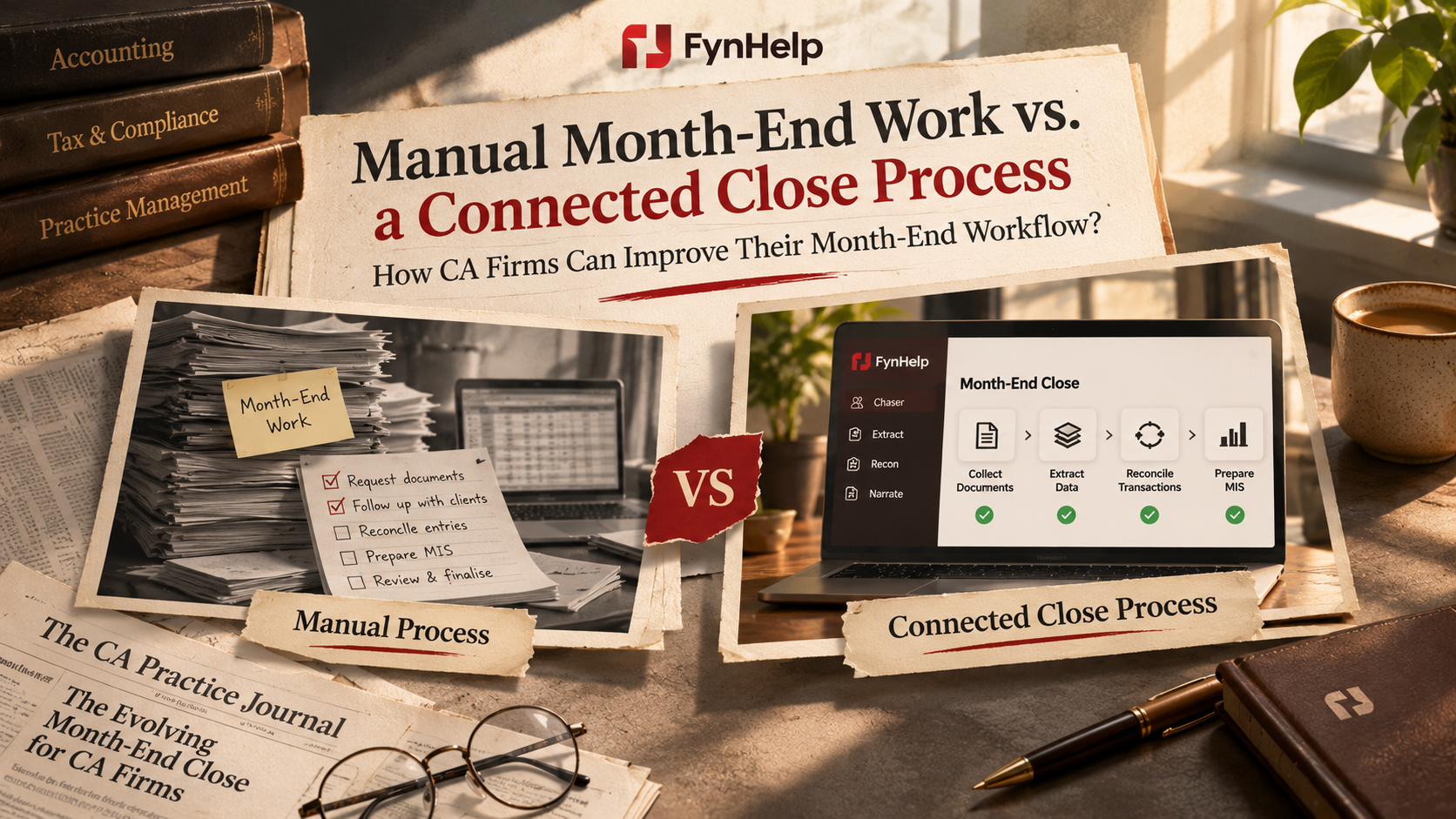
Manual Month-End Work vs. a Connected Close Process: How CA Firms Can Improve Their Month-End Workflow
Month-end close involves more than accounting entries. Discover how CA firms can connect client document collection, data extraction, reconciliation and MIS preparation to improve workflow visibility and reduce manual coordination.
Read article →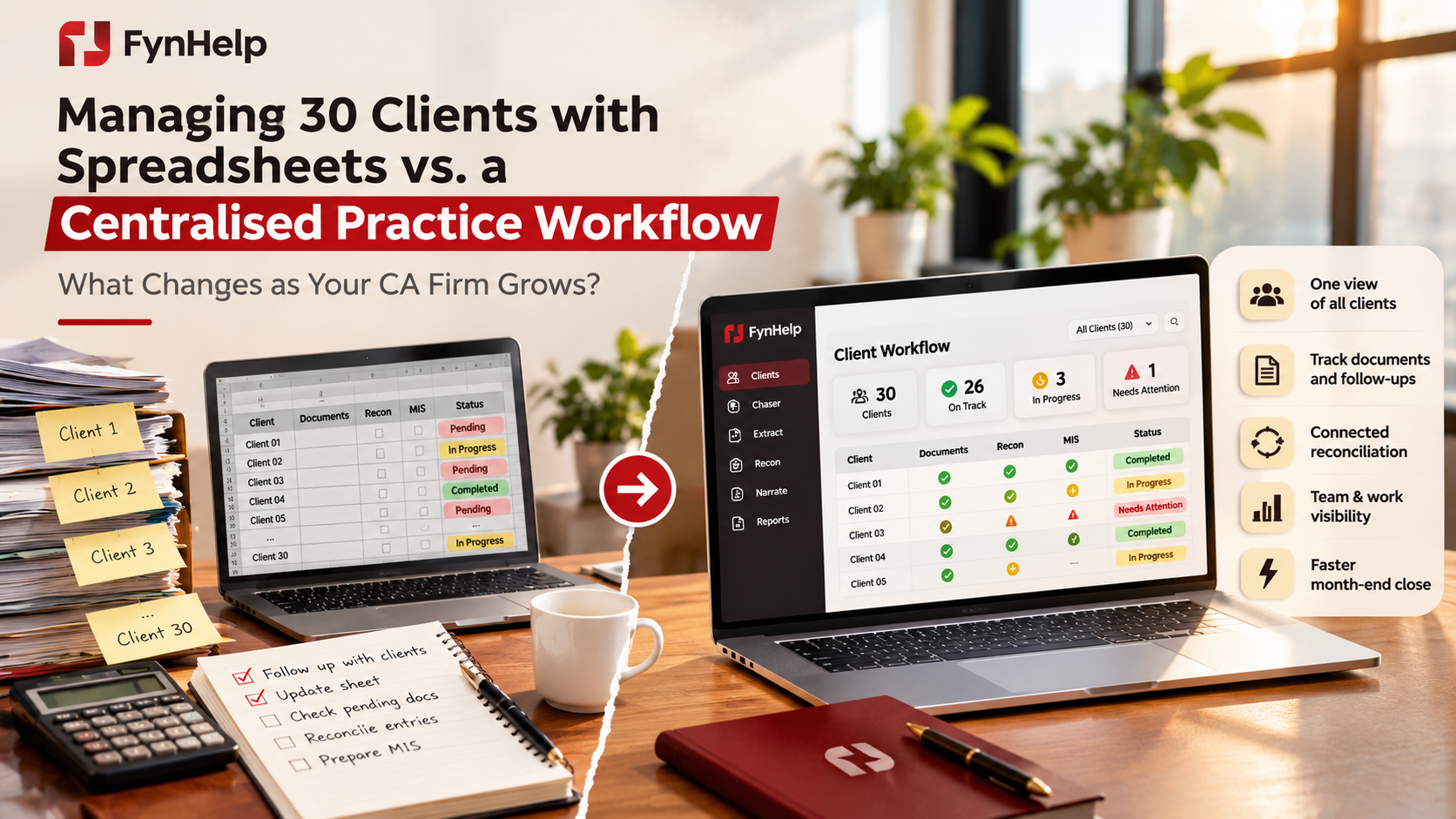
Managing 30 Clients with Spreadsheets vs. a Centralised Practice Workflow: What Changes as Your CA Firm Grows?
Managing multiple clients through spreadsheets, WhatsApp and manual updates can make it difficult for CA firms to track documents, assignments and pending work. Discover how a centralised practice workflow improves visibility, coordination and month-end operations as your firm grows.
Read article →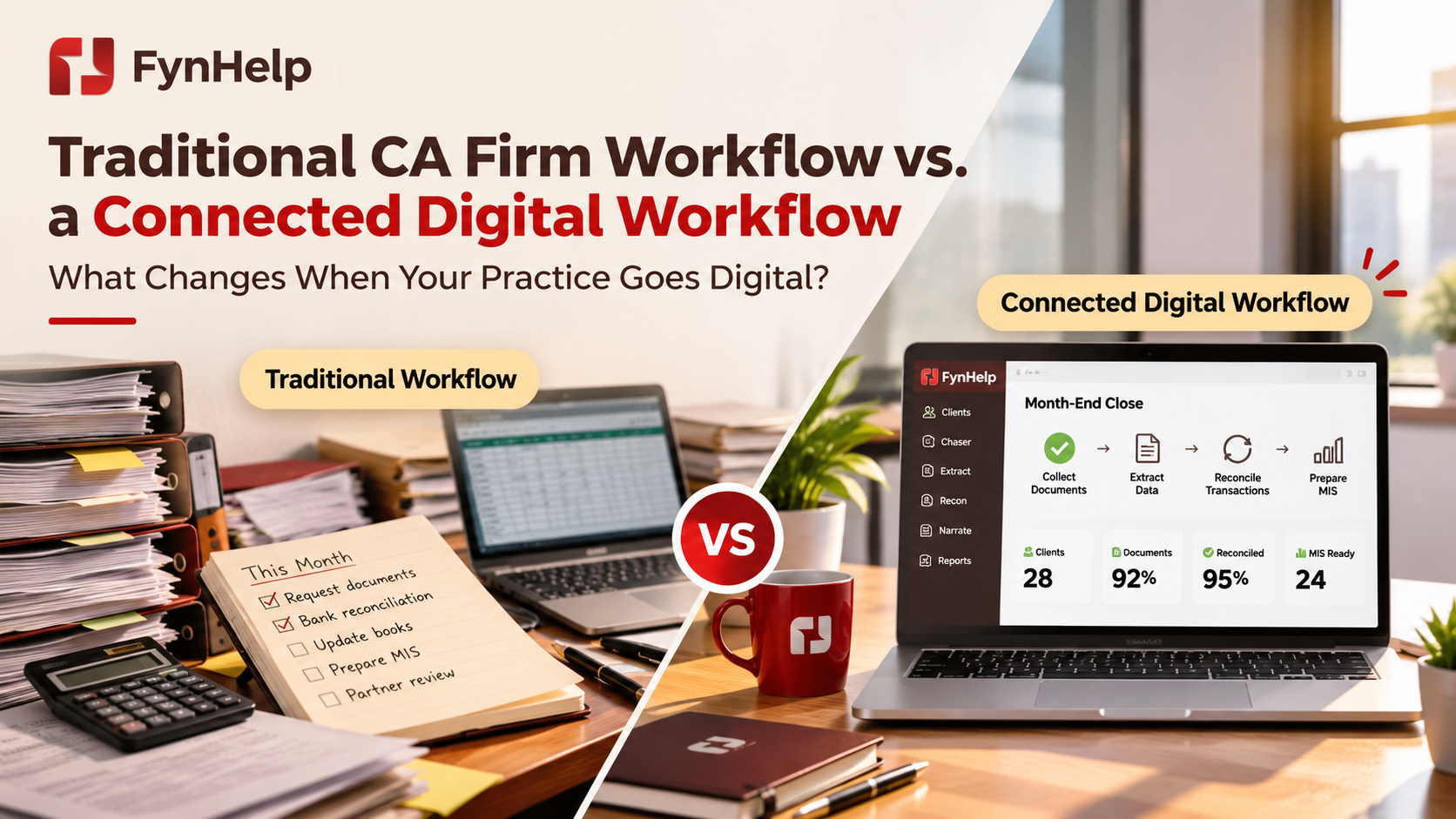
Traditional CA Firm Workflow vs. a Connected Digital Workflow: What Changes When Your Practice Goes Digital?
Discover how disconnected spreadsheets, manual client follow-ups and fragmented accounting processes affect CA firms. Learn how connected digital workflows can improve visibility, coordination and month-end operations.
Read article →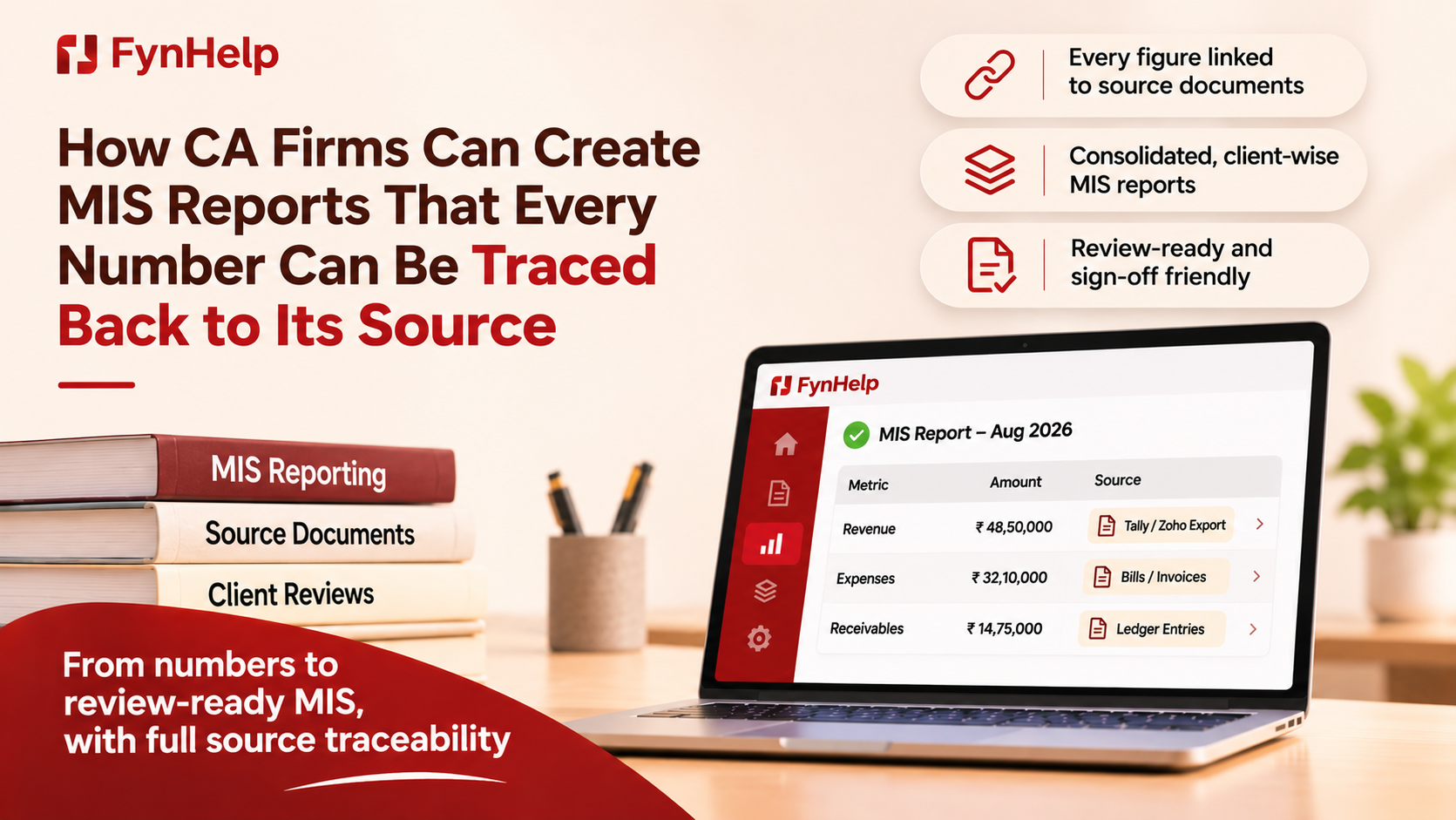
How CA Firms Can Create MIS Reports That Every Number Can Be Traced Back to Its Source
Introduction A monthly MIS is not just a collection of totals. It is a financial story that a business owner or management team should be able to understand and question. For a CA firm, preparing…
Read article →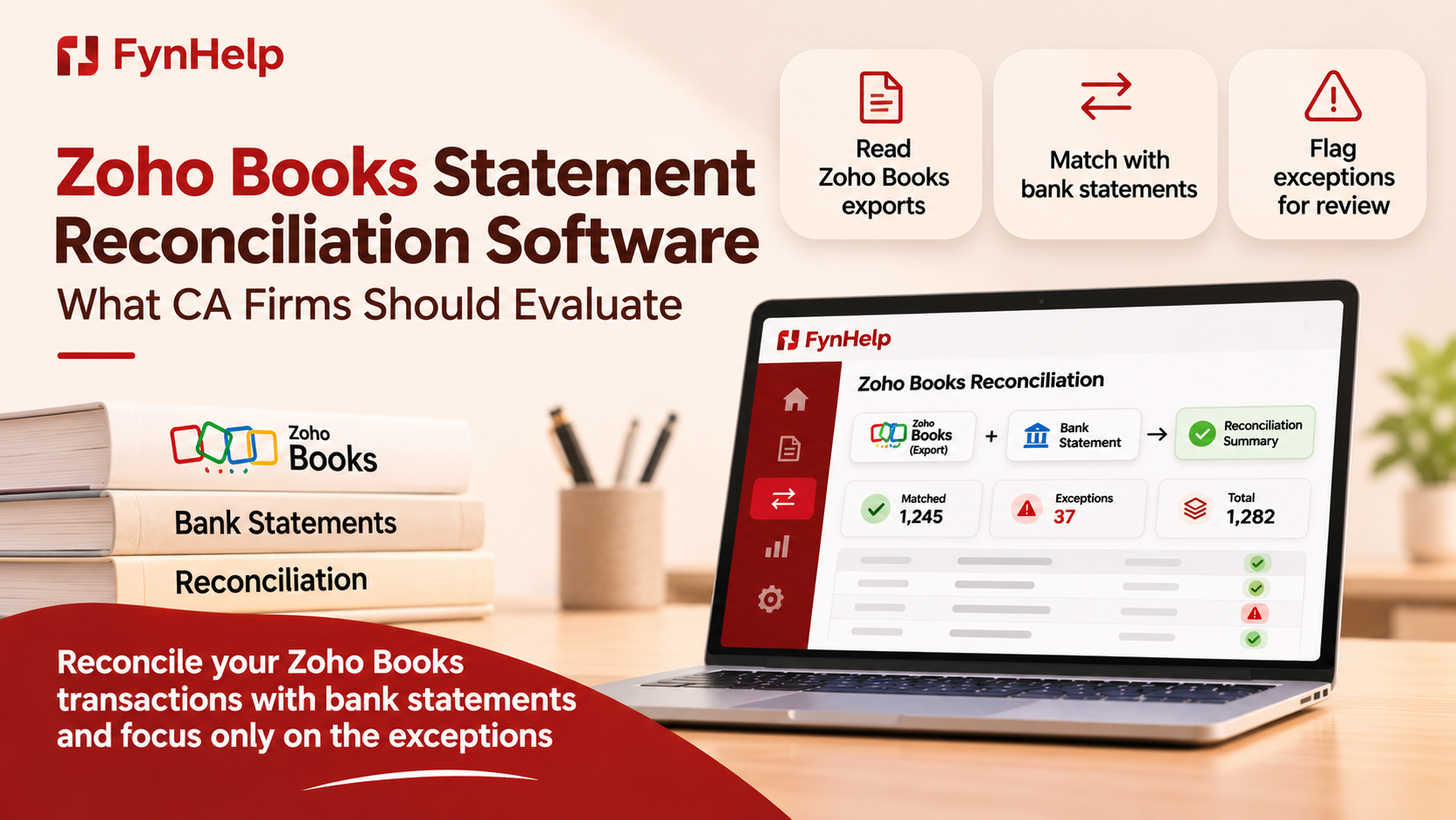
Zoho Books Statement Reconciliation Software
Introduction Zoho Books can be part of a firm's bookkeeping workflow, but managing reconciliation across several client entities still requires a consistent review process. Bank statements and…
Read article →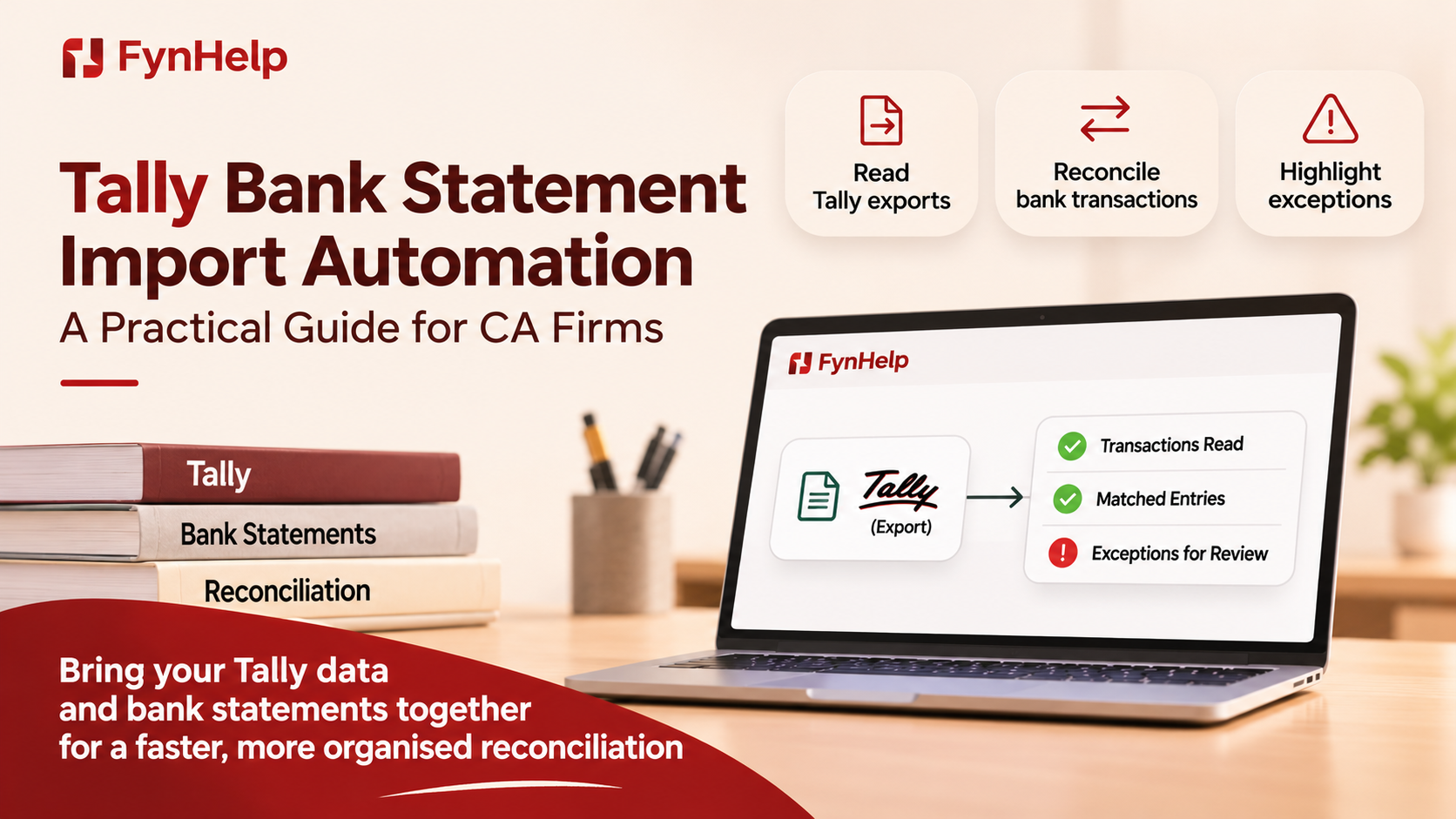
Tally Bank Statement Import Automation: What CA Firms Should Know
Introduction Many firms searching for Tally bank statement import automation are trying to solve a genuine month-end problem: too much time is spent moving bank data into a usable accounting…
Read article →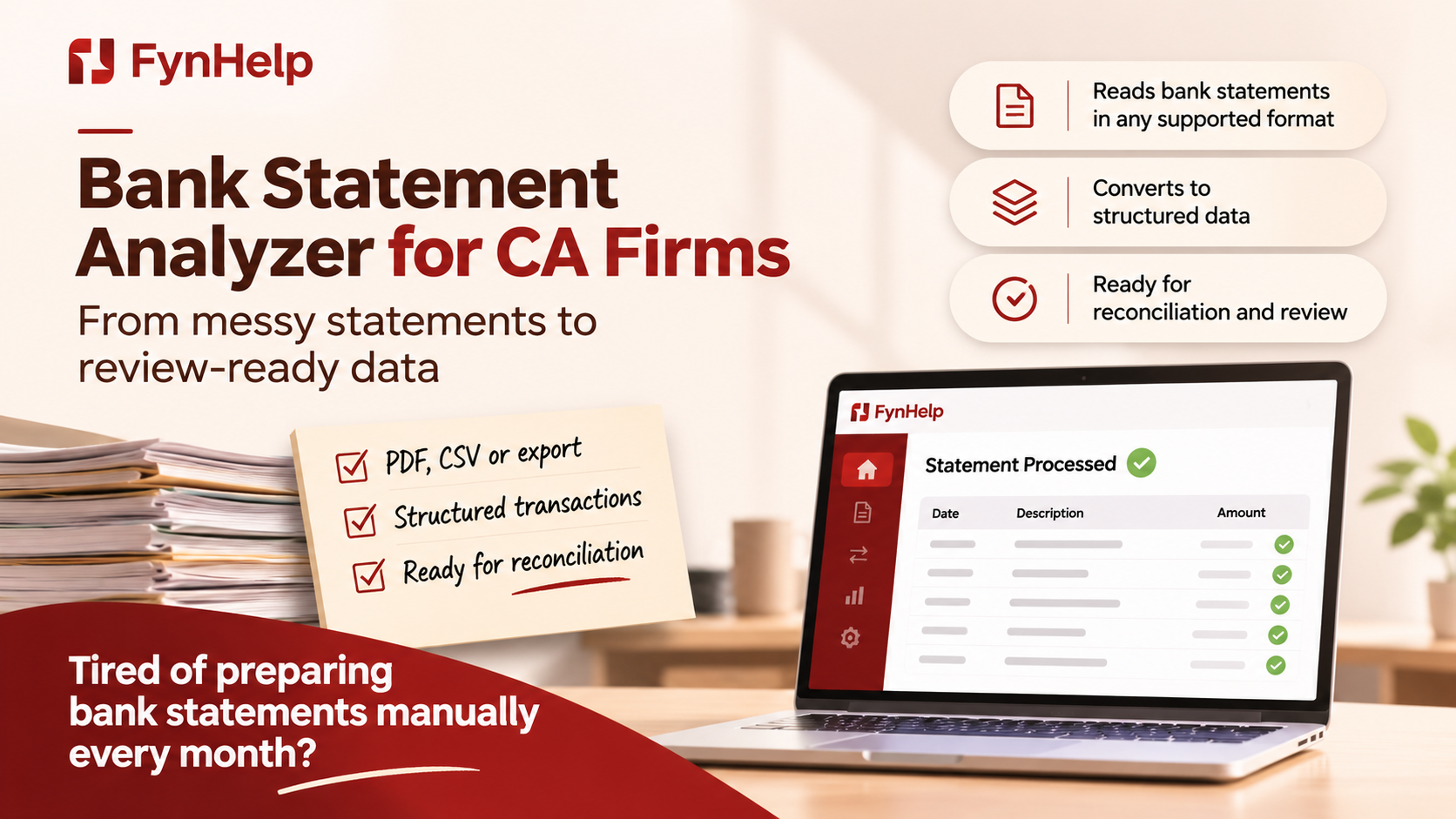
AI Bank Statement Analyzer for CA Firms
Introduction A bank statement is one of the most familiar documents in a CA firm's month-end workflow. Yet reading it is only the first step. Before a transaction can be reconciled, someone has to…
Read article →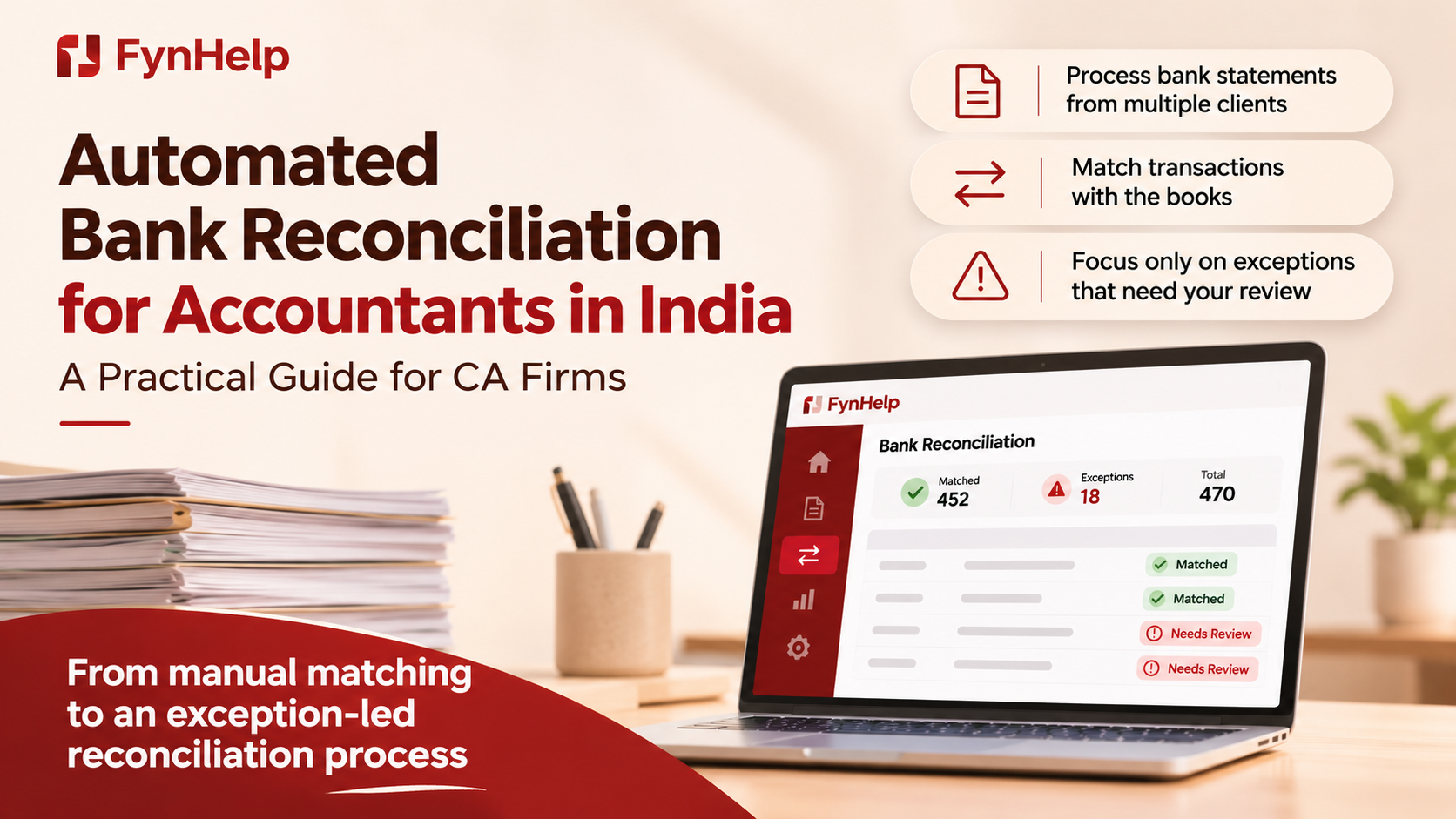
Automated Bank Reconciliation for Accountants in India
Introduction Bank reconciliation is routine accounting work. In a CA practice, however, routine does not mean small. The same comparison repeats across client entities, bank accounts, and accounting…
Read article →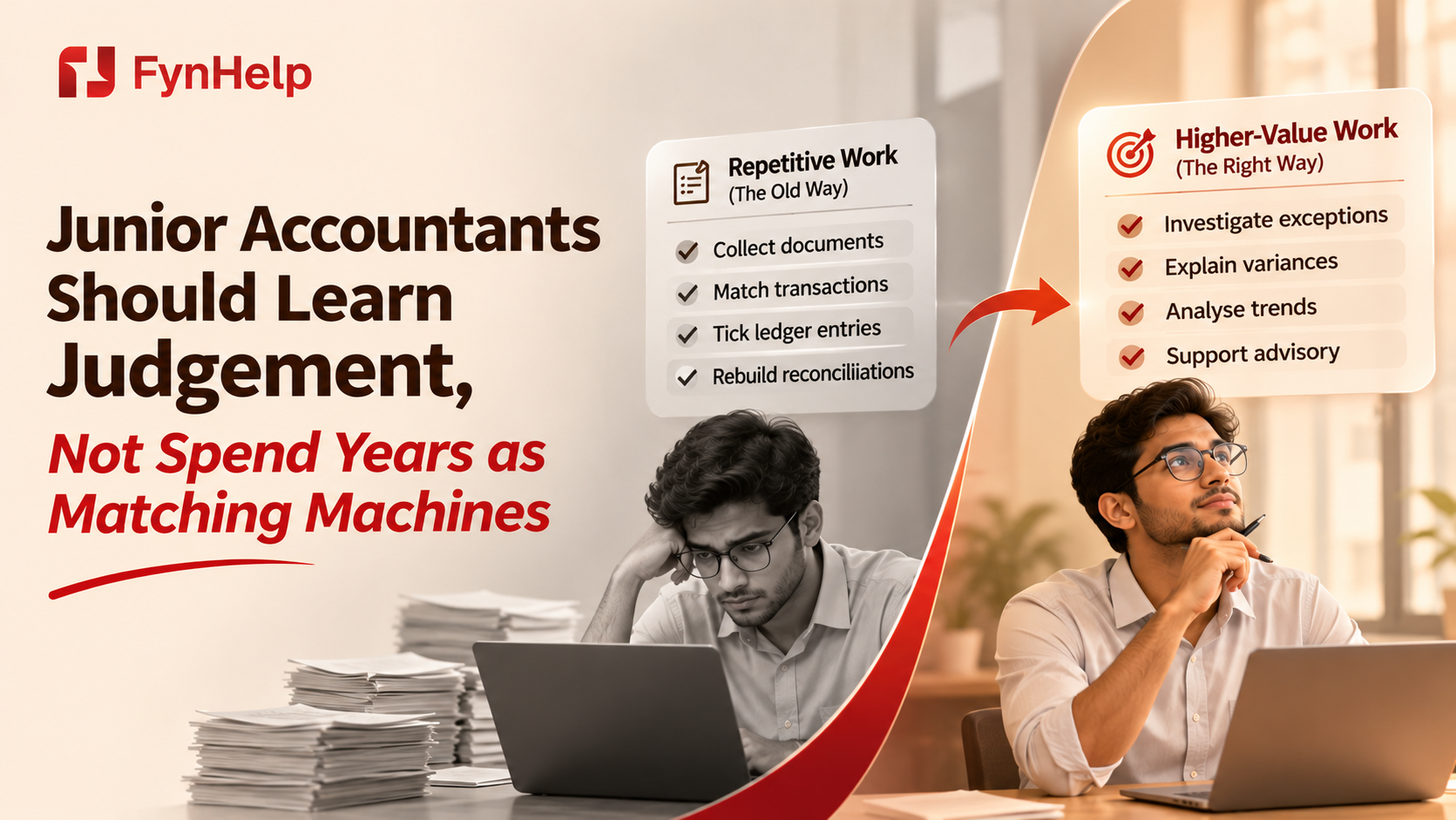
Junior Accountants Should Learn Judgement, Not Spend Years as Matching Machines
Automation can change the work of junior accountants by taking over document extraction and routine matching, which leaves exceptions for people to investigate. This shifts early careers from…
Read article →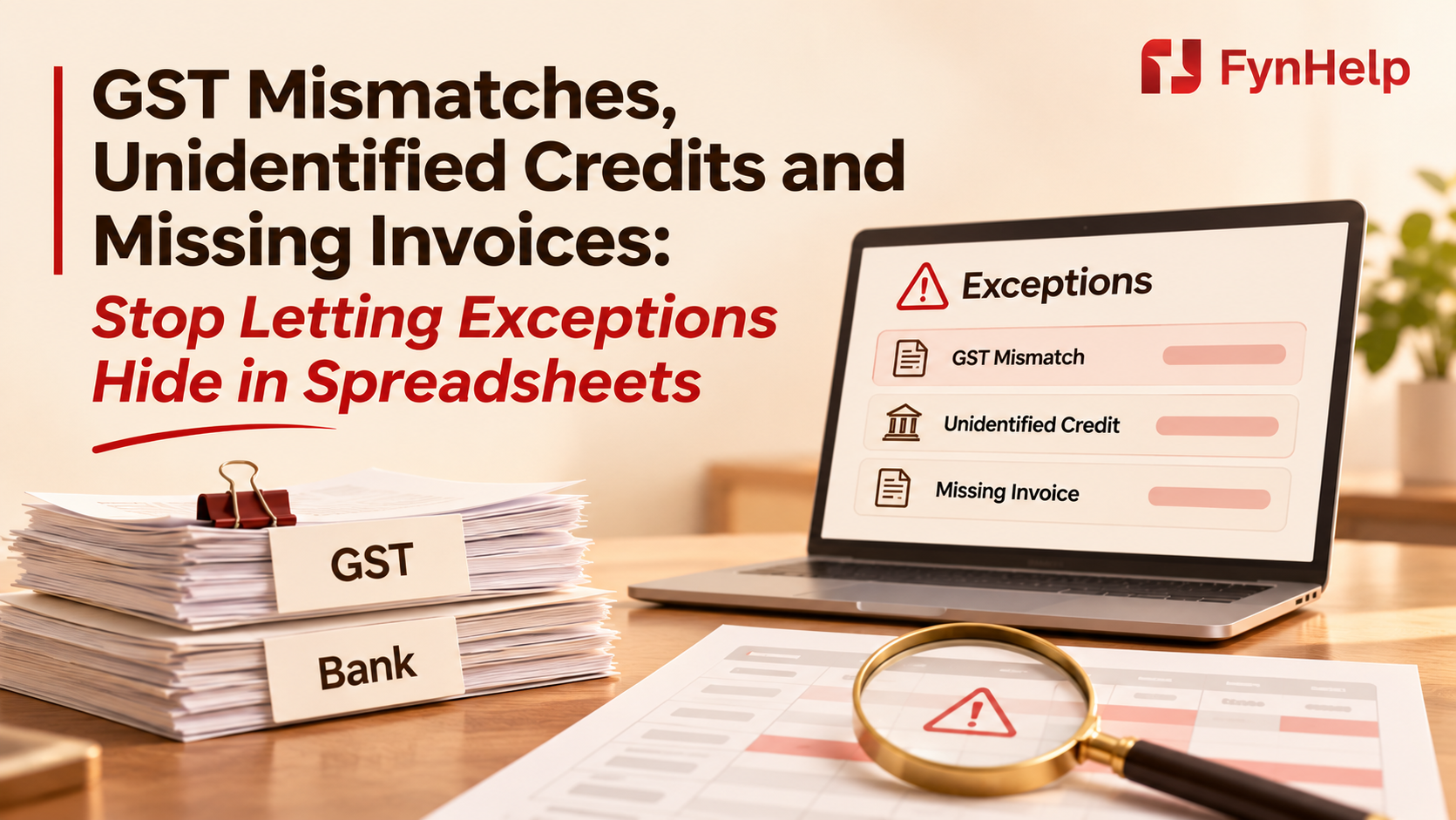
GST Mismatches, Unidentified Credits and Missing Invoices, Stop Letting Exceptions Hide in Spreadsheets
Bank and GST reconciliation exceptions include unclear receipts, payments settling several invoices, vendor-name differences, missing or duplicate bills, timing differences, and GST data mismatches.…
Read article →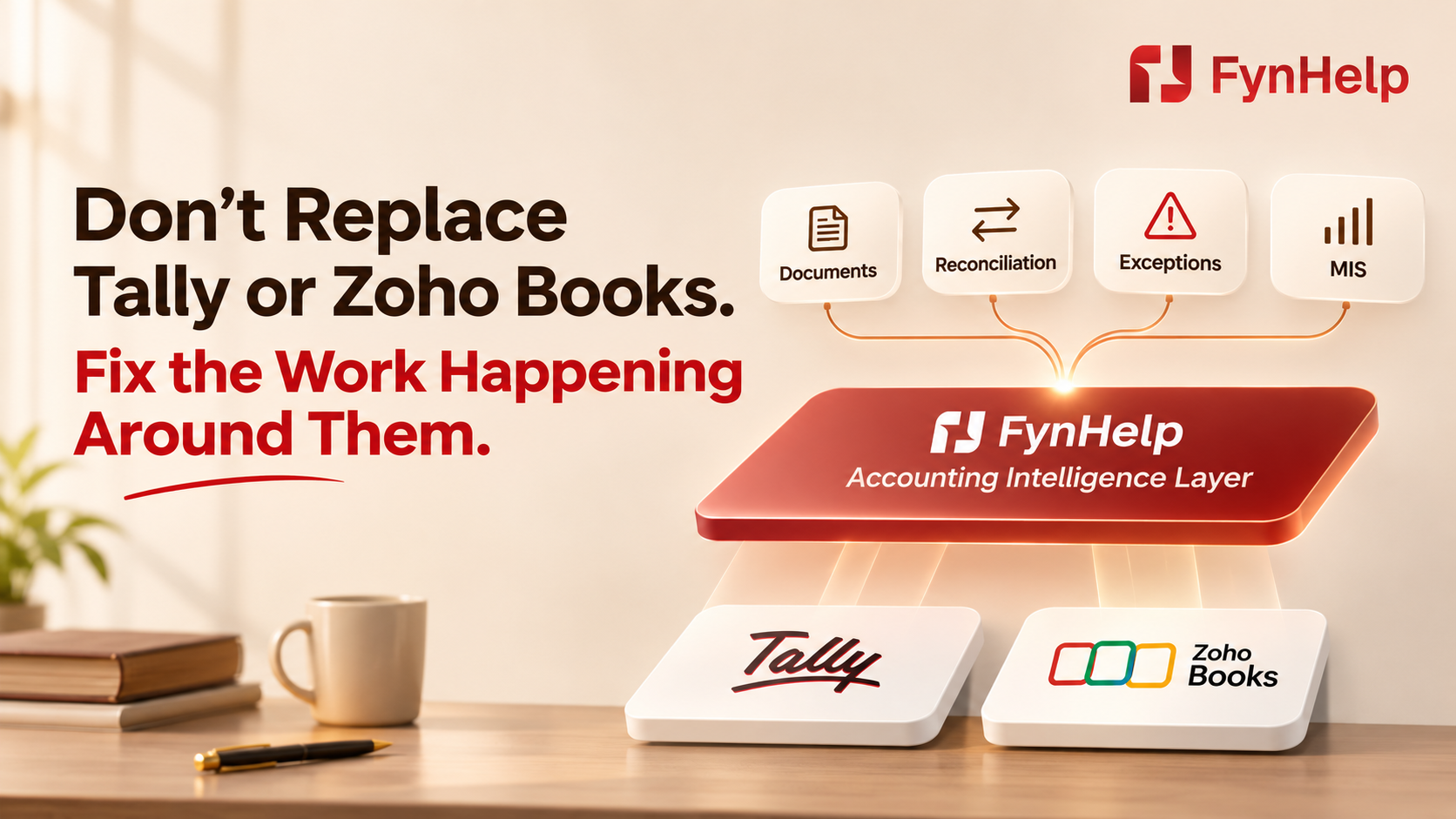
Don't Replace Tally or Zoho Books. Fix the Work Happening Around Them
An accounting intelligence layer is software that works above existing accounting systems such as Tally and Zoho Books. It extracts data from bank statements, invoices, and GST documents, reconciles…
Read article →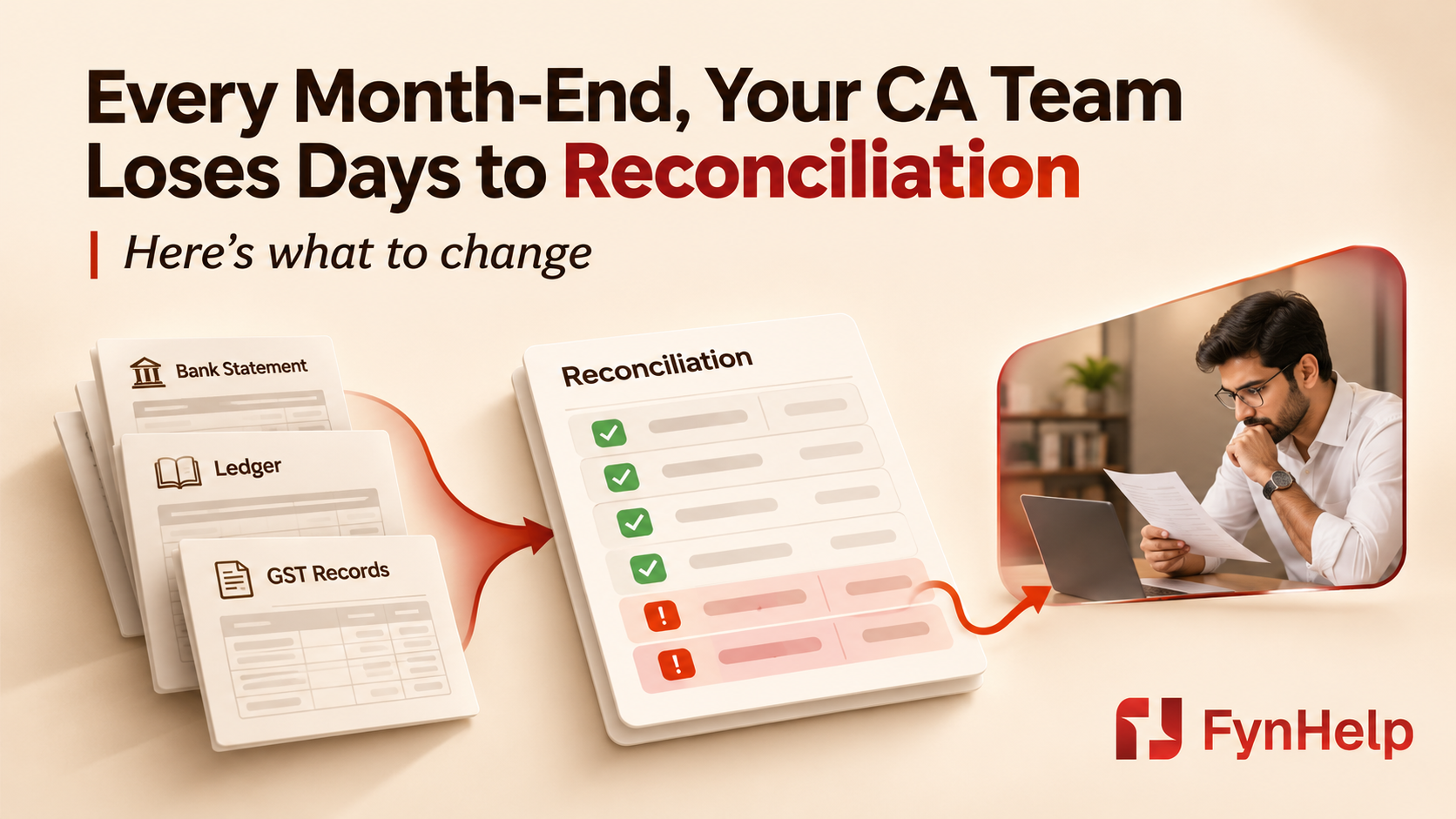
Every Month-End, Your CA Team Loses Days to Reconciliation
Month-end reconciliation takes days in many CA firms because staff manually collect bank statements, compare them against ledgers and GST records, and investigate mismatches client by client. A more…
Read article →FynHelp in the news: launch coverage for India's CA firms
FynHelp's launch has been covered by 10 news outlets under 4 headlines. Read the coverage, and what FynHelp does for CA firms at month-end.
Read article →Bank reconciliation in TallyPrime: step by step, and where it breaks
How to reconcile a bank ledger in TallyPrime, what the reconciliation screen shows, why it slows down at scale, and a faster routine for CA firms handling many clients.
Read article →Bank reconciliation statement: format, example and common mismatches
What a bank reconciliation statement is, the standard format, a worked example with the usual timing differences, and the reasons the two balances differ.
Read article →GSTR-2A vs GSTR-2B: the difference, and which one to use for ITC
GSTR-2A and GSTR-2B both show supplier data, but one changes and one is fixed for the month. How they differ and why 2B is the one to reconcile against.
Read article →8 reasons your books and GSTR-2B do not match (and how to fix each)
The most common causes of an input tax credit mismatch between your purchase register and GSTR-2B, with a practical fix for each, so reconciliation stops being detective work.
Read article →What is an MIS report? Format, contents and a monthly template
What an MIS report is, what a good monthly one contains for a small business client, and a simple template a CA firm can offer as a paid monthly service.
Read article →How CA firms can collect client documents without chasing: reminder templates
Why client documents arrive late, a three-step reminder schedule that works, and copy-and-paste WhatsApp and email templates for bank statements, invoices and registers.
Read article →Tally vs Zoho Books for CA firms: how to choose, and how to work with both
A practical comparison of TallyPrime and Zoho Books for a CA practice, where each fits, and why many firms end up supporting both.
Read article →Virtual CFO services in India: how a CA firm can start (scope, deliverables, pricing logic)
What virtual CFO services include, a simple starter scope built on the monthly close, how to think about pricing, and how to deliver it without adding headcount.
Read article →Software for CA firms in India: what to look for (a buyer's checklist)
A practical checklist for choosing software for a CA practice: what to ask about intake, reconciliation, review queues, sign-off, security and price, and the red flags.
Read article →How CA firms can take on more clients without hiring: where the hours really go
Where a CA firm's month-end hours go, which steps can be automated safely, and how to grow the client list without growing the team at the same pace.
Read article →Indian businesses still rely on manual invoicing despite digital adoption
Digital tools are now widely used across Indian companies, yet invoice handling stays largely manual and prone to delay. Why the gap exists between a digital invoice and a digital process, and how to close it.
Read article →Tally on Cloud or Remote Desktop: getting exports into FynHelp
When TallyPrime runs on a hosted machine, export inside the session as usual, then get the file out by uploading from the session's browser, saving to a drive shared from your PC, or emailing it to the firm inbox.
Read article →How to send Tally data to FynHelp from your office PCs
Export the client's bank ledger from TallyPrime as XML for the month, then upload it on the Documents page or email it to the firm inbox. Works the same on one PC or an office network.
Read article →How to connect Zoho Books to FynHelp (read-only)
A partner connects the firm's Zoho login once, links each client to its Zoho bank account, and pulls a month's bank ledger in as the books side for reconciliation. FynHelp only reads.
Read article →FloQast Alternatives for Indian CA Firms
FloQast is close management for in-house finance teams on ERPs, sold by quote (third-party estimates put a median around $24,000 a year). Indian CA firms closing many SME clients on Tally or Zoho usually need something else: FynHelp for reconciliation and MIS, Suvit or AI Accountant for Tally data entry, or Tally's own reconciliation for a few clients.
Read article →FynHelp vs AI Accountant: Review-First Close vs Auto-Posting
AI Accountant automates bookkeeping for Indian firms: two-way sync with Tally and Zoho, bank reconciliation and GSTR-2B matching, with prices not published. FynHelp reconciles bank to books without writing to the ledger, sends unmatched lines to an exception queue, and drafts a source-linked MIS for partner sign-off, at published per-client prices.
Read article →FynHelp vs Xenett: Which Fits an Indian CA Firm?
Xenett is a review and close tool for accounting firms whose clients are on QuickBooks Online or Xero, priced from about $7.50 per client per month. FynHelp is month-end close software for Indian CA firms whose clients are on Tally or Zoho Books: it reconciles bank to books and drafts the MIS, from ₹2,999 a month for 15 clients.
Read article →Best Bank Reconciliation Software for Indian CA Firms (Honest Comparison)
For an Indian CA firm that keeps client books in Tally or Zoho, the strongest options in 2026 are FynHelp (bank-to-books reconciliation plus MIS, per-client pricing), Suvit (Tally data entry and bank import), AI Accountant (Tally and Zoho sync with GST tools), and the built-in reconciliation in TallyPrime and Zoho Books. Xenett and FloQast suit QuickBooks, Xero and ERPs.
Read article →Tally XML Export to MIS: The Full Workflow
To turn a Tally XML export into an MIS: export the Day Book or bank ledger vouchers from TallyPrime as XML, reconcile those vouchers against the client's bank statement, classify matched lines into revenue, expenses, loans and statutory payments, and build the month's figures from matched lines only, with each figure linked back to its vouchers.
Read article →How to Reconcile GSTR-2B with Your Books Faster
To reconcile GSTR-2B with your books, download the month's GSTR-2B (generated on the 14th), export the purchase register from Tally or Zoho, match invoices on supplier GSTIN, invoice number, date and tax amounts, then act on four groups: matched, in books but not in 2B, in 2B but not in books, and mismatched amounts.
Read article →Month-End Close Checklist for Indian CA Firms
A month-end close checklist for an Indian CA firm has five stages: collect every client's documents, read them into transactions, reconcile bank to books, clear the exceptions, and prepare and sign off the MIS. Each stage has a fixed owner and a date, and statutory payments for the month (TDS, GST, PF, ESI) are checked along the way.
Read article →Bank Reconciliation Automation for CA Firms in India (2026 Guide)
Bank reconciliation automation for a CA firm means software reads each client's bank statement and Tally or Zoho ledger, matches lines in stages (exact amount and date, same day, close amounts, firm rules, split payments), and sends only the unmatched lines to a person. The partner reviews exceptions instead of ticking every line.
Read article →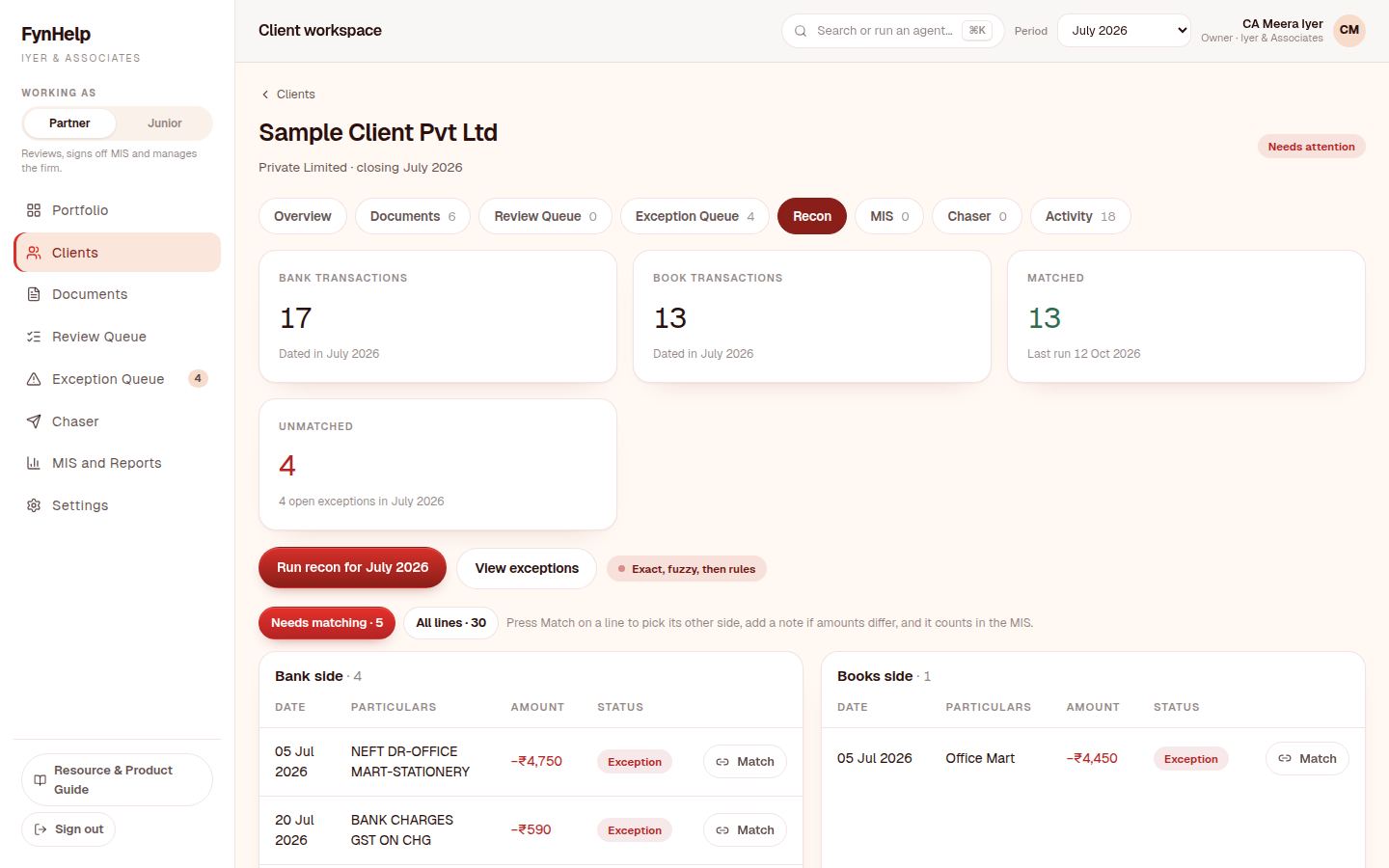
Your first month-end close in FynHelp, step by step
Sign up, upload a bank statement and the Tally books, clear the exceptions and get a signed-off MIS, using free sample files. Every screenshot is the real product.
Read article →Section 43B(h): The MSME payment law every founder must know
A change in the Income Tax Act now gives MSMEs unprecedented leverage over delayed payments from large buyers. Here is what it means and how to use it.
Read article →GST 2.0: What the new rate rationalisation means for you
The biggest GST overhaul in five years is here. A plain English breakdown of what changed, what stayed, and what Indian SME owners need to do now.
Read article →The compliance calendar every Indian SME should run
20 filings across 12 months. The complete GST, TDS, and ROC deadline map for FY 2026-27 with due dates and penalty amounts.
Read article →Close your clients' month-end faster
FynHelp reads bank statements and Tally exports, proves what it read, matches bank to books and leaves you only the decisions. Nothing is posted without your approval.